AgriBusiness Forum in Kinshasa, Democratic Republic of the Congo that was attended by SE Holdings

At the AgriBusiness Forum in Kinshasa, government and economic players from the Democratic Republic of the Congo emphasised the urgent need to exploit the country’s agricultural potential in order to meet the challenge of food insecurity.

With a territory four times the size of France, agricultural production potential capable of feeding a quarter of the world’s population, climatic diversity, freshwater reserves and hydroelectric potential, it’s clear that the Democratic Republic of the Congo has major assets.

But these assets pale into insignificance in the face of food insecurity. It affects 27 million people, and every year the country spends billions of dollars on food imports. 

So how can all this be resolved? That was the question being discussed at the AgriBusiness Forum in Kinshasa.

‘Eternal prospects’: The importance of agriculture

Agricultural growth is imperative. It is more effective in reducing poverty than growth in other sectors. This forum has therefore created an ecosystem around agriculture, including finance, industry, energy and infrastructure. 

The aim is to increase the number of initiatives to promote growth in the sector. The stakes are economic, social and environmental.

“We no longer have time to talk about potential. We urgently need to act,” said Nicolas Kazadi, the Minister of Finance for the Democratic Republic of the Congo.

“Meeting the challenge of agriculture rests on three pillars. The first is infrastructure. The second is governance and the business environment, and the third is the question of the entrepreneurial culture of local people first, and then attracting foreigners. We need to do this because we have been relying for too long and too heavily on the mining sector, which will not last forever.” 

Nicolas Kazadi, Minister of Finance, Democratic Republic of the Congo

“As far as agriculture is concerned, our prospects are eternal. So now – more than ever – is the time to take advantage of this strong situation in the mining sector to build something else, to diversify our economy by relying on our most reliable, most sustainable asset, which is agriculture and agro-industry.”

The government has launched a programme of reforms to promote the development of private investment in the country’s main agricultural value chains. The ten-year strategy will boost the productivity of farmers and human capital, develop energy and transport infrastructure, and improve the governance framework: a virtuous circle to increase cooperation between national and international operators and economic bodies.

“We’re working both with the public and the private sector,” explained Mary Porter Peschka, the Regional Director for East Africa at the International Finance Corporation (IFC).
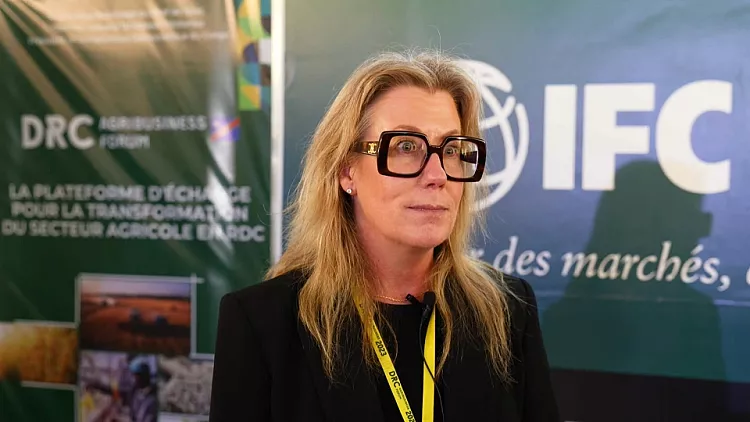
Nicolas Kazadi, Minister of Finance, Democratic Republic of the Congo

“We recently completed a number of deep dives, [and] studies on key agricultural sectors. And we’re also working on the investment side, making loans, taking equity positions and agricultural companies in the country. These things together, as well as good policy from the government, are gonna be what moves things forward”.

How can the DRC unlock its agricultural potential?

The country could increase its food production to feed its 100 million inhabitants and boost its exports. 

The sector employs around 70% of the population and accounts for 20% of GDP. Despite this potential, the Democratic Republic of the Congo has low agricultural yields, with 51 million hectares of uncultivated land out of 80 million hectares of arable land.
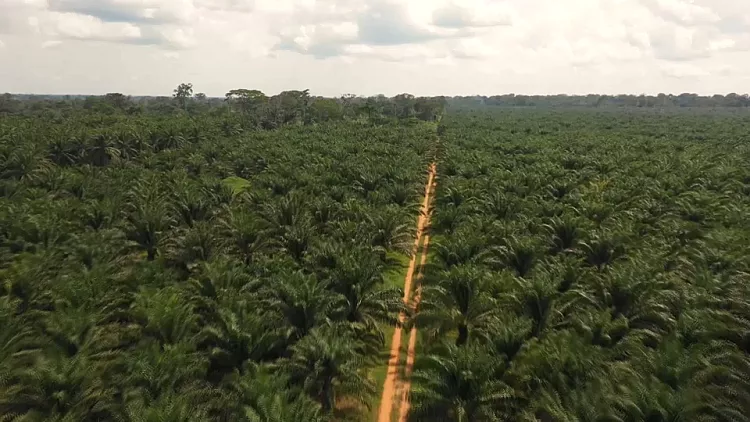
The DRC has 51 million hectares of uncultivated land out of 80 million hectares of arable land

“What we’re doing is encouraging entrepreneurs in incubators to tell themselves that they need to know the law,”  Anthony Nkinzo Kamole, the Managing Director at the DRC’s National Investment Promotion Agency (ANAPI) told Focus.

“They need to know how to draw up a business plan. They need to have bankable projects. And then they must be able to have what we call a kind of financial management of their project.”

Anthony Nkinzo Kamole, Managing Director, DRC’s National Investment Promotion Agency (ANAPI)

“Today, with 80 million hectares of arable land, we need to ensure that malnutrition can be genuinely reduced. So can we really afford to fail? I think we can no longer afford to fail.”

This proactive policy has seen the emergence of six large-scale food-growing sites for local consumption, scattered throughout the country. One example is Bio Agro-Business, in the province of Kongo Central. 

The company produces long-grain rice using an agro-industrial approach and offers training in rural areas.
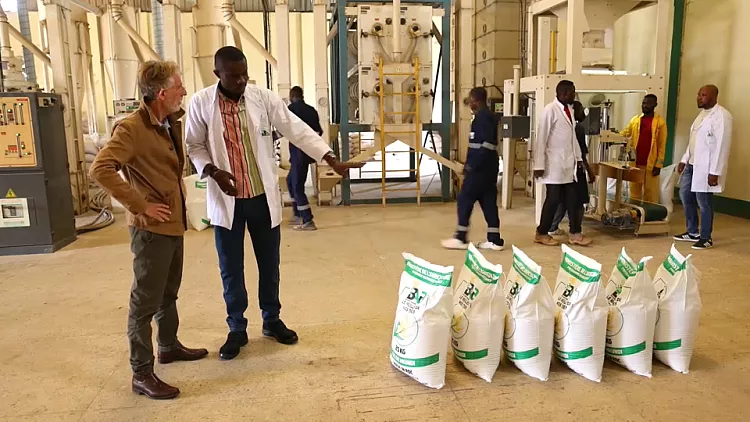
Bienvenu Bieka, Manager, Bio Agro Business in Kimpese

“Our agricultural engineers come to help farmers improve their crop yields,” said Bienvenu Bieka, the Manager at Bio Agro Business in Kimpese. “We give them seeds and then we make machinery available to them for their work. We buy their produce so that they can live well.”

‘We have to believe in our own potential’

These incubators develop local private enterprise through the emergence of young entrepreneurs based on plots of land around production sites. In a global context marked by ecological and security crises, the Democratic Republic of Congo is positioning agriculture as the linchpin of its economic development.
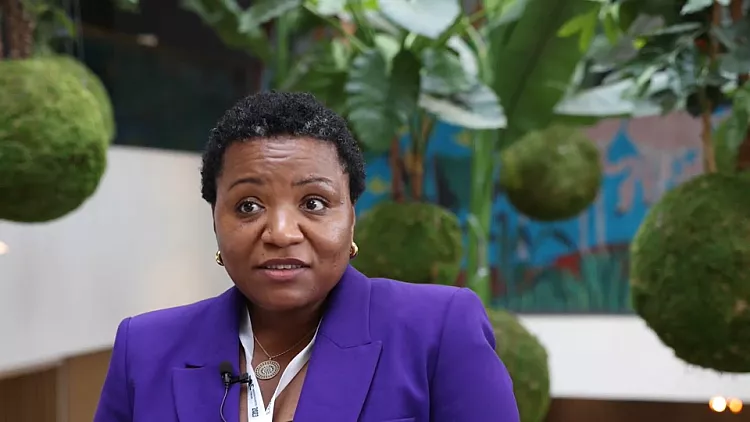
Gracia K. Kabanga, Terra, Democratic Republic of the Congo

“We have to believe in our own potential. We have to really believe in it,” stressed Gracia K. Kabanga of the Terra industrial farming complex.

“These companies are here. That means they have the ambition, they have the courage, they probably have the expertise to do what they’re doing. They just need support. The most important thing is that we are given the opportunity, the framework, to develop fully.”

AgriBusiness Forum: The DRC hopes to unlock its agricultural potential | Euronews
Sowing the right seeds 

Linda Tom sat down with the Director of Servicios Empresaviales Holdings (SE Holdings) Mpumi Maesela for a chat about women in agriculture and how young black farmers can make a name for themselves. 

Who is Mpumi Maesela?  

I am the director of Servicios Empresaviales Holdings (SE Holdings), a business helping to sustainably support all farmers holistically. I have over 15 years of Development Finance experience, providing financial, infrastructure funding, and technical support to more than 100 farmers focusing on aggregating crops and grains across the African continent. SE Holdings partnered with Tiger Brands to join the Agricultural Aggregator Programme in 2020 to expand and solidify the support that we provide to Tiger Brands farmers across KwaZulu-Natal, Limpopo, North West, Mpumalanga, and Free State.  

What agricultural challenges do you face as a black businesswoman?  

Access to finance, market access, and access to agricultural infrastructure and resources are a problem for many farmers. However, as a black businesswoman, it comes down to having to continuously prove yourself and the opportunities you come across. Given the historic discrimination in South Africa, many black women are faced with less opportunities to thrive. However, over the last few years, there has been an uptake in black women in agriculture and having meaningful and impactful roles in the industry. SE Holdings has built a strong network with key industry players across the agri-value chain for support and sustainability of its business. This has enabled us to discern the requirements needed to secure markets for the emerging commercial farmers through the Tiger Brands Agricultural Aggregator Programme.  

How does farming affect gender roles?  

Women who work in the agriculture sector are still battling the perception that farming is a ‘man’s job’. We cannot deny the gender bias that is still prevalent in many cultures and industries whereby patriarchal and traditional values still influence the perception of gender roles. Women who are expected to attend to household tasks are not always encouraged to take up leadership roles, and aspects such as prejudice, sexism, and discrimination from both men and women are generated by the idea that agriculture is a man’s job. However, with having more women present in the agriculture industry, it has a greater impact in gender empowerment and hopefully overall production. The impact of a woman’s income has a much greater impact on her family and community.  

How big a role does mentorship play in establishing new farmers?  

I believe very strongly in holistic technical mentorship and coaching or providing support for the farmers. Mentorship also plays a role in solving the economics of agriculture, ensuring quality produce, and solving offtake challenges–a major opportunity for smallholder farmers, who would generally have their crop rot in their fields due to lack of offtake opportunities.  

What skills do you feel are most lacking among black farmers?  

It is not skills as much as it is access to resources and access to information. Giving access to market, funding, necessary skills, and mentorship to the farmers that would ordinarily not have access and opportunities to aggregator programmes is life changing. South Africa’s agricultural education sector is failing to produce a new wave of farmers and agriculturalists, with fewer youngsters being drawn to study agriculture as a career. In addition, colleges and universities are producing under-experienced job candidates, while a lack of training among unskilled and semi-skilled workers is preventing the sector from building from the bottom up.  

What advice would you give to young black farmers?  

One needs to understand the fundamentals of agriculture: commitment, patience, discipline, and focus. As farmers actively managing the whole value chain of aggregating and supplying the best crop there is, this should be the goal in mind. Surround yourself with people who can support you and you can reach out to, to learn and grow your expertise. With looking for the best suited opportunities and being confident in yourself and skills, there will be a moment where you shine.  

Do you think the government takes farmers seriously?  

Yes, the government is aware of the importance of the agriculture sector, not just in South Africa, but for the region. The collaborative support that the private and government sectors have provided for many farmers has created incredible opportunities. There is still room for governments to build credibility over time through consistent commitment to implementing policies efficiently and effectively. 

Young farmer now grows nuts for SA’s top brands

A development programme aimed at small-scale farmers has allowed a young female farmer from Mutele to get a foot in the door of a major buyer of produce. The 28-year-old Azwikonei Ramalivhana is now producing ground nuts that are used by Tiger Brands to produce its iconic peanut butter.

Ramalivhana receives assistance from Tiger Brands’ Agriculture Aggregator model. This programme was introduced in 2019 and pairs small-scale farmers with aggregators. As fully fledged business entities, these aggregators procure from multiple farmers and enter into commercial agreements with corporates such as Tiger Brands, providing better guarantees on tonnage, delivery time frames, and quality standards.

According to Litha Kutta, Tiger Brands’ enterprise and supplier development director, many young people are looking at agriculture as a possible career. But, while many of these individuals are qualified to some extent, she says, they remain left out of the agriculture industry, either due to a “lack of access to develop their skills” or the need to receive “corporate assistance” when it comes to developing their entrepreneurial ambitions.

These issues speak to the greater challenge facing small-scale farmers who struggle to produce at the scale and quality that large food producers demand. Reaching this level of production requires development and support, often spanning several years – something that adds complexity to a corporate supply chain.

As a way to address this challenge, Tiger Brands introduced its Agriculture Aggregator model, which, through expert technical and management-skills support, helps small-scale farmers to compete at a commercial level. Since its launch, the programme has supported 157 black small-scale farmers and raised R54 million in funding.

In the case of Azwikonei Ramalivhana, she was paired with Mpumi Maesela, director of Servicios Empresaviales Holdings. Under Maesela’s guidance, Ramalivhana has been able to grow her enterprise, providing Tiger Brands with two hectares’ worth of ground nuts.

Ramalivhana cultivates a further eight hectares for herself, which brings in added revenue and enables her to hire one permanent employee and three temporary workers.

“I didn’t have a job or food for my family, so I decided to start planting okra, tomatoes and spinach,” recalls Ramalivhana, who started out with half a hectare of land. “I wanted to produce food for the people around me and try make some income for my family at the same time.”

At the beginning, Ramalivhana did not earn enough to pay for any help. This changed when she entered the Agricultural Aggregator Development Programme.

“There is a very real risk facing the survival of South Africa’s agricultural sector if we don’t encourage more young people to participate in it,” says Kutta. “These graduates are an untapped workforce with a keen interest in agriculture. It will benefit us all to help nurture them by removing barriers to entry, so that they can make a valuable contribution to the sustainability of agriculture.”

Zoutnet | News | Young farmer now grows nuts for SA’s top brands

Tiger Brands builds and supports emerging farmers through its development fund

Ventersdorp – Food manufacturing giant Tiger Brands is providing emerging farmers with funding and skills to be able to participate in its empire through a small farmer development programme that is part of its transformation drive.

The company, which produces millions of tons of various foods daily, has invested millions through its Dipuno Enterprise and Supplier Development Fund, which was launched in 2019.

The company, which produces millions of tons of various foods daily, has invested millions through its Dipuno Enterprise and Supplier Development Fund, which was launched in 2019.

The funding is implemented through farm aggregators across the country to assist the company in receiving the required demand for farm produce.

Under the programme, the first group of white maize farmers from Ventersdorp, in the North West Province, presented their first crop this week.

Participating farmers received funding for supplements, which enabled them to produce on a bigger scale than they could do on their own.

More on this

Patel calls on Tiger Brands to halt retrenchment talks and consider alternatives

Tiger Brands’ Western Cape factory set to shed 4 500 jobs as Agri SA sounds alarm

South Africans are eating less bread as food prices soar

Foodmaker RFG’s shares stumble as it flags rising input costs for global commodities

A farmer, Kagiso Molebaloa, said while he started farming in the early 2000s with his parents, it was the first time he planted 300 hectares of maize that he will supply to Tiger Brands. He leased communal land from the local traditional authorities, which had not been used before.

“It helps a lot to be under the aggregators, the input cost of agriculture is very steep. I would not even attempt to plant on land that is this big. The fertiliser and everything else is very expensive. The Dipuno fund funds 90% of our input, so it takes the bulk of the cost off.

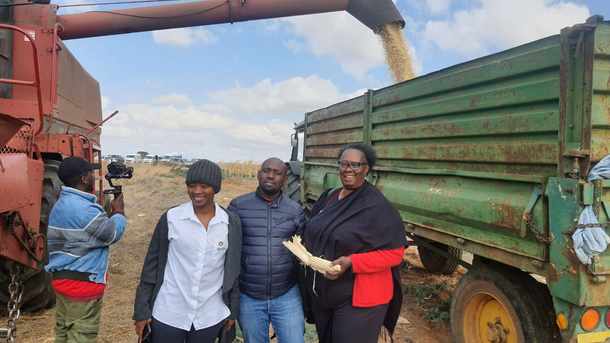
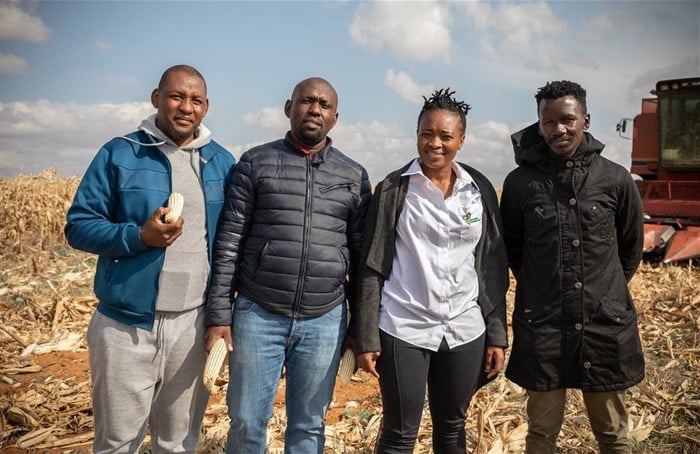
Ventersdorp emerging farmers who are part of Tiger Brands small farmers development programme harvested their white maize they will supply to the company. Picture Siboniso Mngadi

Ventersdorp emerging farmers who are part of Tiger Brands small farmers development programme harvested their white maize they will supply to the company. Picture Siboniso Mngadi

“As a result, the programme enabled us to develop more quickly than we otherwise could have done with our resources.

“It is a very good project because it allows us to grow,” he said. “The commercial banks don’t have to give us the lowest rate; they just have to give us the funding and technical support we need.”

Another farmer, Lerako Naphtaly, leased a commercial farm where he grows white maize.

He said the aggregator model has been beneficial as Tiger Brands required large scale produce throughout the year.

“It is hard to enter into this business because you need to be a commercial farmer to meet their demand. But through aggregators, they managed to combine our produce well, get a share and participate in the economy.

Emerging farmers can now benefit from the Tiger Brands’ development programme to become one of their suppliers, as the company aims to increase its local produce

“Their financial support has been great and made it possible for us as small farmers. All we need is more land so we can keep this going,”he said.

Litha Kutta, Tiger Brands Enterprise and Supplier Development Director, said there was a pressing need to change the situation and agriculture was an integral part of turning things around. He said the company was doing its part to transform small farmers to participate in its dominance in the food sector.

He added that while many of these emerging farmers were qualified to some extent, they remain left out of the agriculture industry either due to a “lack of access to develop their skills” or the need to receive “corporate assistance” when it comes to developing their entrepreneurial ambitions.

“These issues speak to the greater challenge facing small-scale farmers who struggle to produce at the scale and quality that large food producers demand. Reaching this level of production requires development and support, often spanning several years – something that adds complexity to a corporate supply chain.

“As a way to address this challenge, Tiger Brands introduced its Agriculture Aggregator model, which, through expert technical and management skills support, helps small scale black farmers to compete at a commercial level,”he said.

He added that since it launched in 2019, the programme has supported 157 small black farmers and raised R54m in funding.

Other small farmers who are interested in the programme are urged to get in touch with the business to learn more. Kutta said they want to foster relations with the government to gain access to land and increase their funding to a billion rand to increase local produce for the company.

Tiger Brands builds and supports emerging farmers through its development fund (iol.co.za)

Gender diversity will drive future agri growth, says Nedbank

The South African agriculture sector continues to deliver growth and value to the economy, with a growth rate of 13.1% recorded in 2020, 8.3% in 2021 and a 3.6% year-on-year growth rate so far this year.

Growth will, however, taper off soon if the sector does not find new ways of managing complexities that impact growth, such as gender diversity, says financial services provider Nedbank.

The Bureau of Food and Agricultural Policy (BFAP) expects agricultural growth will decelerate towards the end of this year and into 2023; however, transformation, inclusion and diversity can be essential growth drivers in the agricultural space and for the country as a whole, Nedbank says.

“By supporting a more diverse and inclusive environment, the sector can create jobs, and advance food security and sustainability,” notes Nedbank agriculture head John Hudson.

Nedbank cites research published by international journal Journal of Development Studies, finding that empowering women leads to economic benefits for their homes, communities and the sector.

This is echoed in a study conducted by consultancy McKinsey, titled ‘The Power of Parity: Advancing Women’s Equality in Africa’, which points out how Africa could add $316-billion to its yearly gross domestic product if it makes gender equality a priority.

“Currently, the South African labour market is more supportive of men than it is of women, with female unemployment at 37.3%,” Hudson explains, adding that there is a need for reform, both at policy level and local level, to improve access to financing, support and opportunities for women in an active way.

He believes the sector can reduce the hurdles that women face in the sector by taking measurable and functional steps to make access to finance and support easier.

For example, financial institutions, the public sector and other private sector companies can prioritise female empowerment and drive the diversity conversation throughout their interactions with the sector.

This will drive a wider approach to transformation and create opportunities that will give women the chance to realise their potential and expand their ideas into commercially viable enterprises.

Hudson says it is important to go beyond just paperwork and lip service and to empower women within the agricultural sector tangibly, giving them the financial instruments and support they need to be innovative, to grow their businesses, and to make the most of their opportunities.

Nedbank, for one, is committed to the growth and transformation of the agricultural sector and has put the gender inclusion conversation at the forefront of its agenda.

This commitment extends into job creation, a sustainable economy and sustainable solutions to contemporary issues facing female farmers, as well as into developing tailor-made solutions that fit their requirements and growth expectations.

CASE IN POINT

JSE-listed packaged goods manufacturer Tiger Brands has a growing supplier base of black women-owned enterprises across its value chain.

The company spends an average R4.2-billion on procurement with black women-owned enterprises a year and is actively working to increase that figure.

Tiger Brands says black women farmers, in particular, are a fundamental source of agricultural commodities used for the production of some of the company’s most iconic and well-loved brands, including Koo, All Gold, Black Cat and Ace.

At least 70 women farmers in key agricultural communities across South Africa provide ingredients, including ground nuts, tomatoes, white maize, small white beans, sorghum and wheat, to Tiger Brands.

A critical focus for Tiger Brands is to help scale these farmers to operate at a commercial level in South Africa – a barrier which few are able to break.

Tiger Brands has an Agriculture Aggregator programme in place to support farmers in reaching commercialised operations, including through market access, opportunities to receive input finance, and through providing agrarian and technical support.

In turn, the aggregators can enter into agreements with multiple smallholder farmers to procure the volume of agricultural raw materials required by Tiger Brands.

For example, SE Holdings director Mpumi Maesela, an aggregator for Tiger Brands since 2020, has been supplying the company with A-grade small white beans together with smallholder farmers across KwaZulu-Natal, Mpumalanga, North West, Limpopo and Free State.

Tiger Brands says it is always on the lookout for eligible black women farmers who have a desire and passion for farming, as well as access to land and water.

“If we are going to tackle the issue of food insecurity in a sustainable manner, it is agriculture that we need to look to, because farms and farmers produce the food that feeds the people.

“It is important that large organisations support the sector and build the capacity and capability of farmers so that they are well-equipped to ensure that all South Africans have access to a healthy and nutritious meal every day,” says Tiger Brands corporate affairs and sustainability chief officer Mary-Jane Morifi

Gender diversity will drive future agri growth, says Nedbank (engineeringnews.co.za)

Servicios Empresaviales Holdings (SE Holdings)

SE Holdings is a 100% black women-owned, managed, and controlled business that was founded in 2014.

•The senior leadership comprises a team of young but deeply experienced professionals, with expertise in:
•Agriculture and Agro-processing
•Enterprise Development
•Business Strategy
•ICT
•Financial Services
•Supply Chain Advisory
•Project Management
•Fund Management,
•Management Consulting

SE Holdings has refined its business model to narrow its focus on the agriculture SMME sector. The business transitions subsistence rural micro-scale farmers to being small business owners in the agricultural sector i.e., Agri-SMMEs participating meaningfully in the mainstream economy

SE Holdings has aggregated 5 (five) farmers that have focused on the production of over 250 tons of small white beans supplied to Tiger Brands.

Servicios Empresaviales Holdings (SE Holdings) – Dipuno (dipunofund.co.za)

Women farmers bolster Tiger Brands value chain

At least 70 women farmers provide key ingredients to Tiger Brands. These include ground nuts, tomatoes, white maize, small white beans, sorghum, and wheat. The food giant is using Women’s Month to celebrate their contribution

South Africa’s biggest food producer is increasingly sourcing inputs from black women-owned enterprises across Mzansi. Tiger Brands now spends R4.2 billion of its annual procurement bill with black women-owned farms and other enterprises and says it is actively working to increase this number.

“Women entrepreneurs are playing a key role in providing either services or goods to Tiger Brands,” the food giant says. “Black women farmers, in particular, are a fundamental source of agricultural commodities used for the production of some of Tiger Brands’ most iconic and well-loved brands, including KOO, All Gold, Black Cat and ACE.”

At least 70 women farmers provide key ingredients to Tiger Brands. These include ground nuts, tomatoes, white maize, small white beans, sorghum, and wheat.

At the same time, Tiger Brands helps to scale these women farmers to operate at a commercial level in South Africa.  

The company says it is using the opportunity presented by Women’s Month to celebrate the black women-owned agricultural enterprises and women-owned smallholder farmers who are breaking through barriers to achieve commercial operating status with its support as all of the form part of the Tiger Brands supply chain and contribute to creating thousands of jobs in their local communities.

“It fills us with great pride that South Africa’s most iconic homegrown brands have powerful and motivated women behind them who not only run their own businesses as successful entrepreneurs, but also create employment and bring positive change in the lives of others and communities,” says Mary-Jane Morifi, chief corporate affairs and sustainability officer at Tiger Brands.

“Their passion, hard work and love for agriculture goes into growing the key ingredients we use to produce loved brands that satisfy the tastes of our consumers.”

Family food security

Women farmers are also making a critical contribution to tackling household food security in South Africa where research indicates that more than 12 million people go hungry every day. Children are the most vulnerable.

“If we are going to tackle the issue of food insecurity in a sustainable manner, it is agriculture that we need to look to, because farms and farmers produce the food that feeds the people,” says Morifi. “It’s important that large organisations like Tiger Brands support the sector and build the capacity and capability of farmers so that they are well-equipped to ensure that all South Africans have access to a healthy and nutritious meal every day.” 

Tiger Brands Aggregator Agriculture Programme

Tiger Brands agriculture aggregator Mpumi Maesela, director of SE Holdings.

Farmers forming part of Tiger Brands’ Agriculture Aggregator Programme are supported to grow at scale and operate at a commercial level. Tiger Brands provides aggregators with market access and the opportunity to receive input finance, agrarian and technical support. Aggregators, in turn, enter into agreements with multiple smallholder farmers to procure the volume of agricultural raw materials required by Tiger Brands. 

Mpumi Maesela and Lusanda Moletsane are two of Tiger Brands’ most successful women agriculture aggregators.

Mpumi Maesela, director of SE Holdings, has been a Tiger Brands agriculture aggregator since 2020 and has since supplied Tiger Brands with A-grade small white beans. Maesela works closely with smallholder farmers across KwaZulu-Natal, Mpumalanga, North West, Limpopo and the Free State to procure Tiger Brands commodities and provides them with agri-fundamentals to support growing businesses.

Maesela is from rural Eastern Cape and says that, although her background is in the finance sector, her true passion is farming and her ambition is to make farming “cool”.

Lusanda Moletsane’s agri company, Khumo Ea Tsabo, also produces small white beans for Tiger Brands. In 2021, Moletsane’s two farming clusters in Nigel and Bronkhorstspruit yielded around 500 tonnes of produce.

Moletsane leans on her mentors for guidance, believing there is always something new to learn and says her aim is to help “feed the nation”.

Tiger Brands says it works consistently to help transform the South African agricultural sector through its Aggregator Programme and is continuously on the lookout for eligible black women farmers who, amongst other criteria, have a desire and passion for farming, as well as access to land with the required natural resources such as water.

Women farmers bolster Tiger Brands value chain – Food For Mzansi

Tiger Brands’ agriculture aggregator programme – growing more than just crops

Tiger Brands recently invited media to the North West province to visit one of the businesses supplying Black-run farms. Here, we got to meet some of Tiger Brands’ most successful agriculture business owners and woman aggregator farmers who supply the business with not just white maize for Ace, but small white beans for Koo and ground nuts for Black Cat Peanut Butter.

The farm visit also explored Tiger Brand’s broader Agriculture Aggregator model initiative which aims at increasing the number of participating Black small-scale farmers participating in the company’s value chain, by having these farmers work directly with an aggregator, that provides technical and management skills.

The model, which was launched in 2019, has created 834 permanent and seasonal jobs. With the aim of growing the number of Black suppliers for the company holistically, the programme has supported 157 small Black farmers and raised R46m in funding.

How the model does this

The aggregator programme pairs small-scale farmers with expert Black-owned farming companies known as aggregators. These aggregators provide technical and management skills to small-scale farmers, allowing them to receive the necessary support to contribute to Tiger company’s value chain.

As fully-fledged business entities, aggregators procure from multiple Black farmers and enter into commercial agreements with corporates such as Tiger Brands, for example, providing better guarantees on tonnages, delivery timeframes and quality standards.

The company, in turn, supports aggregators with input finance, offtake agreements and agrarian and technical support that is also extended to Black smallholder farmers.

Tacking food security

Tiger Brands has also been actively working towards achieving greater food security where it operates while building an inclusive economy. Through its Enterprise and Supplier Development (ESD) programmes, the company has been focused on growing Black suppliers within the value and supply chain of the company to create jobs and drive inclusive growth.

One such supplier is Mpumi Maesela. Maesela, a young farmer and the director of SE Holdings joined the programme in 2020; since, her business has supplied Tiger Brands with over 90% of its a-grade small white bean requirement.

Maesela also works closely with smallholder farmers across KwaZulu-Natal, Mpumalanga, North West, Limpopo and Free State to produce Tiger Brand’s commodities and provides them with agri-fundamentals to support growing businesses.

“Being in the Tiger Brands Aggregator Programme has enabled SE Holdings to sustainably grow as a small aggregator alongside its network of farmers through providing pre-production planning and planting scheduling training to meet standards and quality specifications, holistic farming support, financial management, and everything in between to enable small-holder farmers to practice good agronomical practices.

“It has been life-changing for the small-scale farmers who are majority youth and women. They ordinarily have no access to technical support, production inputs finance, mechanisation and offtake to work their lands. The programme provides holistic support to the farmers,” says Maesela.

Securing agricultural supply

ESD is central to the strategic future of the company, which aims to increase its procurement spend with Black agriculture and non-agricultural enterprises, secure agricultural food supply within South Africa through localised sourcing, and develop production and financial capacity of Black-owned enterprises through the provision of procurement access, financial and technical support.

ESD programmes, which also support the development of direct and indirect suppliers, include:

• The Dipuno Enterprise and Supplier Development Fund, a R100m fund that provides liquidity support for Black-owned direct and indirect suppliers, Black smallholder farming enterprises, and Black distributors who have secured procurement opportunities with Tiger Brands.

• The Market Access Accelerator, an incubation support initiative that drives the support of Black-owned and Black women-owned enterprises to commercialise their businesses and expose them to market opportunities.

The support includes business training, compliance support, business governance, technical support, tendering, and bid support to enable them to access procurement opportunities within the company’s supply chain, value chain, and distribution chain.

• The Channel Development Programme, which aims to provide capacity-building support to emerging Black distributors to enable them to drive the distribution of Tiger Brands products in under-serviced markets. These markets include informal/spaza markets, sector-focused distribution, township food services, and private sector food services suppliers.

“More households in South Africa are under increased financial pressure of late and hunger is a challenge that millions continue to battle every day. As one of Africa’s largest food producers, Tiger Brands has a responsibility to work towards achieving greater food security in vulnerable households and in a manner that is sustainable for all,” says Mary-Jane Morifi, chief corporate affairs and sustainability officer, Tiger Brands.

“The farmers that we work with through our Agriculture Aggregator Programme and who are supported by our Dipuno Enterprise and Supplier Development Fund with financial and technical expertise, are a fundamental part of bringing to life our purpose to nurture and nourish more lives every day.

“If we are to actively work for the relief of hunger within local communities, building a sustainable agricultural sector in South Africa is imperative.

“Through our Enterprise and Supplier Development programmes we want to create a more inclusive environment for farmers in South Africa with equal opportunity to participate at a level that makes a quantifiable difference in the lives of those less advantaged,” adds Morifi.

Tiger Brands’ agriculture aggregator programme – growing more than just crops (bizcommunity.com)

Ex-banker empowers farmers from rural areas

Mpumi Maesela’s passion for empowering female farmers drove her out of her job as a banker to agriculture.

After spending many years working as a banker for the Women’s Development Bank – which focuses on funding and empowering women in business, especially in rural areas – she wanted to do more to help.

Many rural women farm and Maesela decided that getting these subsistence and small-scale farmers to work together to grow enough of each crop to attract commercial buyers was the best way to empower them.

She says it also bothered her that fertile land was unused because the community did not have the money and resources to start farming.

Promoting farming was her way of helping communities grow their own food and earn an income.

Maesela left her job and went to Spain, where she learnt strategies to uplift rural farmers.

On her return in 2014, she founded SE Holdings, which helps women farmers with technical knowledge, funding, skills and market access.

The company also owns heavy agricultural equipment that it makes available to farmers.

In addition, Maesela has built a network of markets, including food manufacturers and supermarkets, to ensure the farmers can sell their produce.

She and her team of 15 work closely with more than 150 emerging and commercial farmers across KwaZulu-Natal, Mpumalanga, North West, Limpopo and the Free State.

“Although SE Holdings does not currently own farms, we do have a small plot where we conduct trials to assist our farmers in producing high-quality harvests. We also provide internships for graduates in agriculture,” Maesela says.

If you want assistance from SE Holdings, your land must be accessible, fenced, have access to water and must have recently been farmed.

You must have a basic business plan and record of what farming you have done on your land.

“Even if you failed somewhere along the way, you must show us so we can intervene and show you where you need to improve.”

Maesela says farmers have to repay their loans once they start making a profit. However, she says that because SE Holdings helps them secure a market, they should soon be profitable.

She is currently in talks with the department of agriculture and rural development to form partnerships, particularly to assist beneficiaries of land reform programmes.

https://www.sowetanlive.co.za/sebenza-live/2022-11-01-ex-banker-empowers-farmers-from-rural-areas/

OUR PRESS RELEASE

Please read about the work we have done so far in Destiny Magazine.